English
 English
 Deutsch
 Español
 عربي
عربي हिंदी
हिंदी

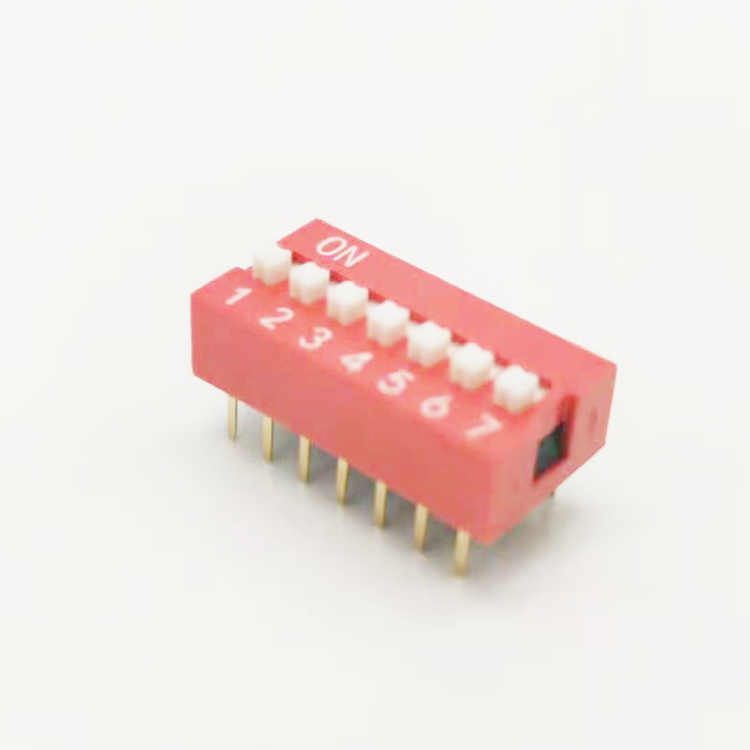
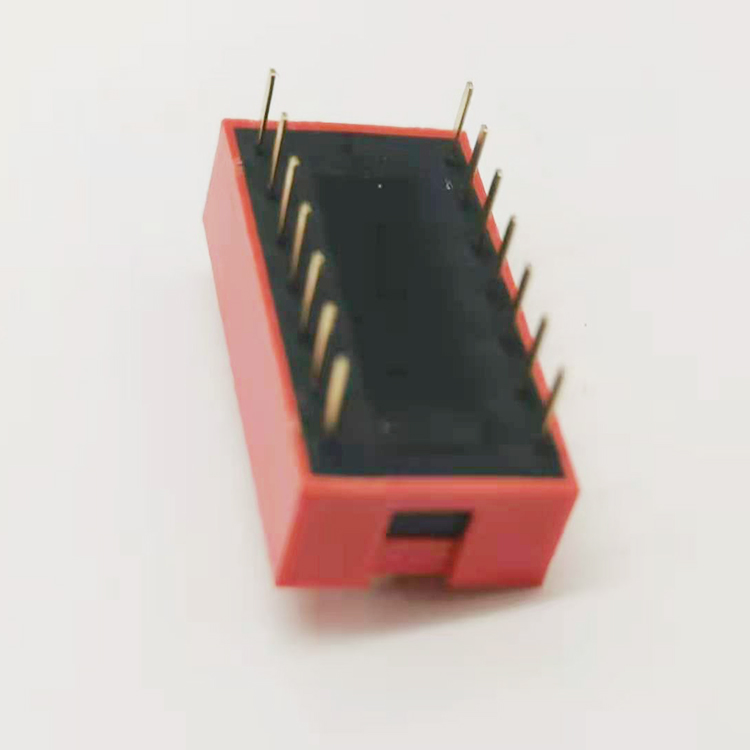
DIP switches are compact manual electronic switches with a standard dual in-line package design. They mount directly on PCB boards for hardware parameter configuration. For industrial equipment and control cabinet design, DIP switches serve as a more stable and reliable alternative to traditional jumper blocks.
Unlike jumper caps that are easy to loose or misplace during on-site wiring, DIP switches offer semi-permanent, tool-free configuration. They simplify hardware setup and effectively reduce hidden faults in long-term equipment operation, which is why they are widely used in industrial control and electronic device design.
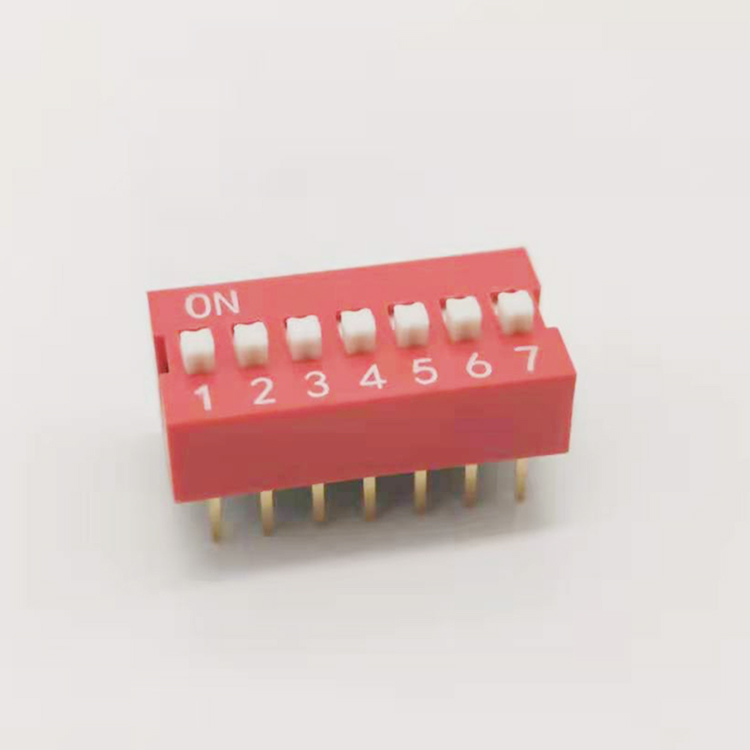
Three Common Types of Industrial DIP Switches
Different DIP switch structures fit distinct PCB installation positions and on-site operation scenarios. Professional manufacturers provide three mainstream styles to match diverse equipment shell and layout designs:
1. Slide Type DIP Switch
This is the most widely used DIP switch in industrial projects. Engineers toggle a small top slider back and forth to turn circuits on or off.
It features a sturdy structure with clear visual on/off status. Field staff can quickly check configuration states at a glance without professional testing tools, making it ideal for conventional PCB top-mounted layouts.
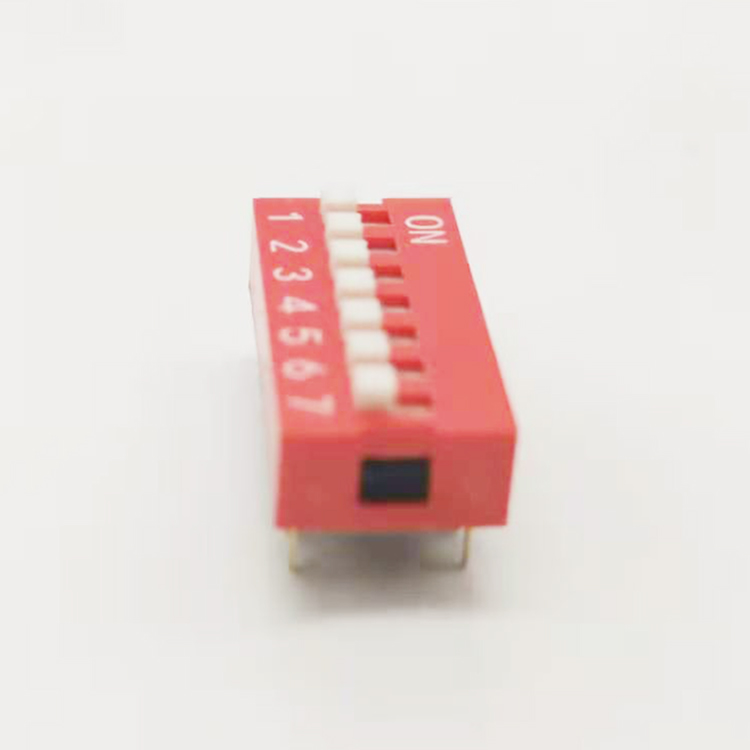
2. Piano Type DIP Switch
Piano-style DIP switches have side-mounted keys instead of top sliders, similar to piano keys. This structural design solves a common on-site installation problem.
When PCBs are installed at the edge of equipment or limited by narrow device enclosures, top operation is impossible. Piano-type switches allow side operation, perfectly adapting to edge-mounted PCB layouts with space limitations.
3. Rotary Type DIP Switch
Rotary DIP switches abandon traditional independent sliders. They adopt a tiny rotating dial that aligns with specific hexadecimal or binary values.
This type is highly targeted for parameter setting. It is the preferred choice for configuring equipment addresses, communication channels and fixed coding parameters in industrial control systems.
DIP Switch Types Comparison Table
This intuitive comparison helps design and procurement engineers quickly select the right DIP switch for different project requirements:
|
DIP Switch Type
|
Core Features
|
On-Site Advantages
|
Best Application Scenarios
|
|---|---|---|---|
|
Slide Type
|
Top sliding operation, clear on/off visual indication, durable structure
|
Easy inspection, low failure rate, universal compatibility
|
Standard top-mounted PCBs, general industrial control equipment
|
|
Piano Type
|
Side key operation, no top operating space required
|
Solves enclosure space limitation problems, flexible installation
|
Edge-mounted PCBs, compact devices with narrow internal space
|
|
Rotary Type
|
Rotary dial positioning, supports hex/binary coding
|
Accurate parameter setting, no configuration deviation
|
Equipment address setting, channel coding, communication parameter configuration
|
Key Practical Benefits of Using DIP Switches
1. Lower Equipment Design Costs
Many low-power industrial devices only need simple fixed parameter configuration. Adding display screens or extra microcontroller interfaces for basic settings will greatly increase production costs.
DIP switches support direct hardware configuration with zero auxiliary circuits. It is the most cost-effective solution for mass-produced standard equipment.
2. Power-Down Configuration Memory
Software-based parameter settings rely on backup batteries to save data. Battery aging or power failure will cause parameter loss and equipment operation errors.
DIP switches adopt physical mechanical positioning. The configured state remains stable permanently, regardless of power outages or equipment restarts. It avoids repeated debugging work for on-site engineers.
3. Higher Hardware Security
Software parameters face risks of remote tampering, program crashes and system bugs. These hidden dangers may lead to abnormal equipment operation.
DIP switch settings are completed through physical hardware. They cannot be hacked or modified by software failures, ensuring stable and safe equipment operating parameters.
Common Industrial Application Scenarios
DIP switches (including standard 8-bit SMD and DIP models) are standard accessories for various electronic and industrial control devices:
- Industrial Control Systems: Set PLC Modbus addresses, baud rates and communication parameters
- Computer Peripheral Hardware: Configure motherboard parameters, expansion card functions and arcade board logic settings
Practical DIP Switch Selection Guide for Engineers
Based on on-site PCB production and equipment maintenance experience, confirm three core indicators before purchasing DIP switches:
1. Number of Positions
Confirm the required configuration bits according to your circuit design. Standard industrial DIP switches range from 1-bit to 12-bit. Reserve 1-2 spare bits appropriately for subsequent equipment function upgrades to avoid secondary board modification.
2. Mounting Method
Match the mounting type with your production process. Through-hole DIP mounting fits traditional plug-in welding processes. Low-profile SMD surface mount models are suitable for automated SMT production lines and ultra-compact PCB layouts.
3. Waterproof and Cleanable Grade
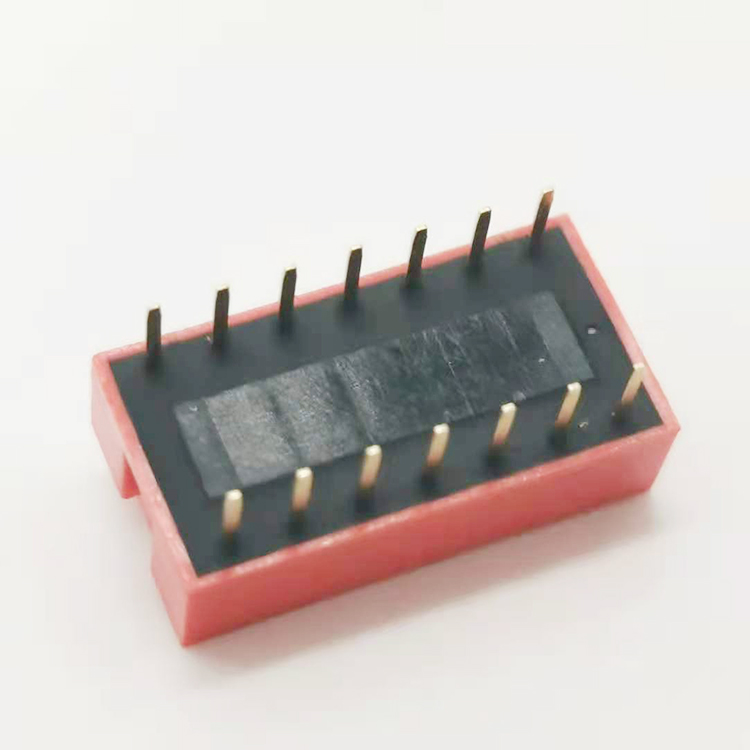
If your PCBs need to pass automatic cleaning processes after welding, ordinary DIP switches will have flux and cleaning solvent residue entering the internal structure, causing poor contact.
Choose sealed cleanable DIP switches with polyimide tape protection. The protective tape blocks impurities during cleaning and can be torn off after processing, ensuring long-term switch stability.
FAQ for Industrial DIP Switches
Q1: What does pitch mean for DIP switches?
Pitch refers to the center-to-center distance between adjacent pins. The industry standard pitch is 2.54mm (0.1 inch), compatible with most universal PCB layouts. For ultra-compact mini devices, 1.27mm half-pitch models are available to save board space.
Q2: Can I clean PCBs with mounted DIP switches?
Yes, but only for sealed and cleanable-grade DIP switches. These switches come with temporary protective tape on the sliders, which prevents flux, dust and cleaning solvent from entering the internal mechanical structure. Just peel off the tape after the PCB cleaning process is finished.
Q3: What is the service life of industrial DIP switches?
DIP switches are designed for fixed hardware configuration, not frequent daily operation. Their mechanical service life is rated at 1,000 to 2,000 operations. This lifespan is completely sufficient for equipment debugging, installation and routine maintenance throughout the equipment life cycle.
Q4: Which is better, slide type or piano type DIP switch?
It depends on your PCB installation position. Slide-type switches are better for top-mounted PCBs with operating space, offering intuitive status checking. Piano-type switches are the only choice for edge-mounted PCBs or equipment with blocked top space, with no performance difference in service life and stability.
Q5: Are rotary DIP switches necessary for industrial control projects?
Rotary DIP switches are specially used for address coding and channel setting. Compared with slide switches, they provide more accurate digital positioning and avoid configuration errors. They are highly recommended for multi-device parallel industrial control systems that require unified address management.
 Contact Us
Signup our newsletter to get update information, promotion and insight.



 IPv6 network supported